How Does an OEM Automatic Tuna Can Opening Machine Vendor Enhance Commercial Canning Operational Safety
SHANTOU, GUANGDONG, CHINA, September 9, 2026 /EINPresswire.com/ -- In commercial tuna canning facilities, the can opening stage presents specific hazards that line managers and safety officers deal with on a daily basis. Manual can opening exposes workers to sharp lid edges, creating laceration risks that account for a notable share of recordable injuries in seafood processing plants. Beyond direct physical harm, hand-operated methods also introduce metal shavings and lid fragments that may contaminate the product inside, raising food safety concerns that can trigger batch rejections or recalls. These realities have pushed processors toward mechanized solutions, and the role of an OEM automatic tuna can opening machine vendor has become central to upgrading both worker protection and hygiene standards on production lines. GCPACK (Shantou Guocheng Machinery CO.,Ltd.,) supplies industrial can opening systems designed to remove human hands from the cutting zone entirely. The company, based in Shantou, Guangdong Province, brings over two decades of packaging machinery experience to its equipment designs, holding multiple patent certificates and maintaining ISO-level quality management across its manufacturing operations.
Q1: How Does Automatic Can Opening Reduce Laceration and Contact Risks?
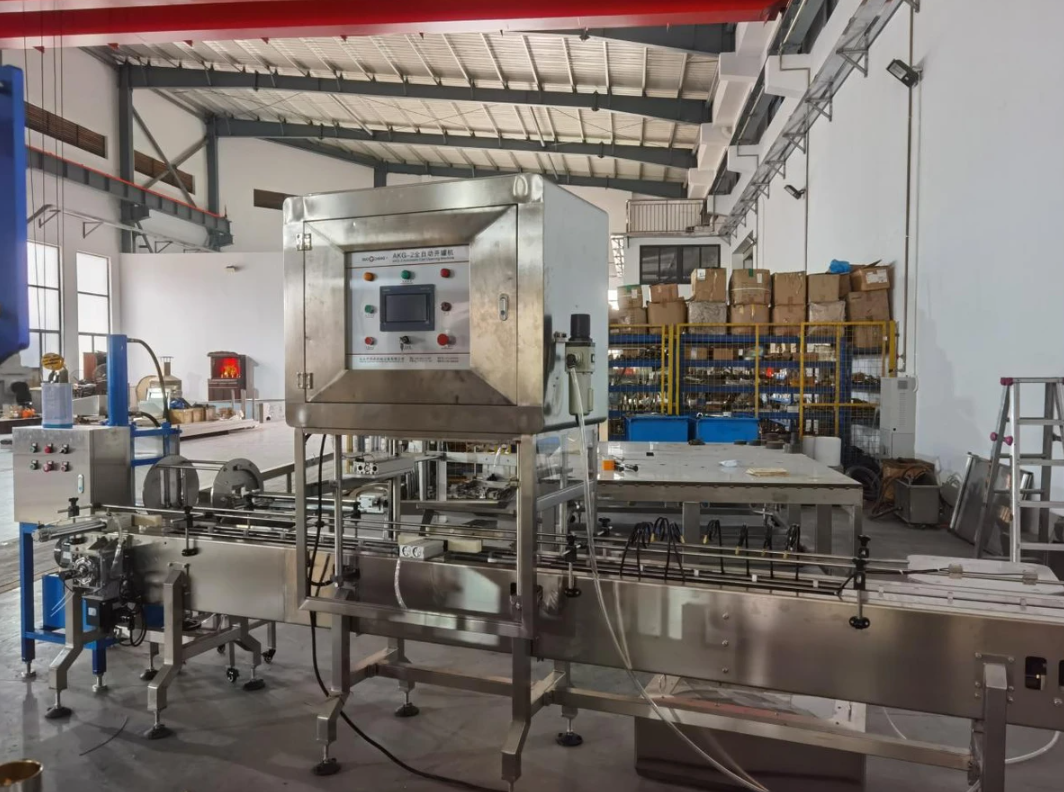
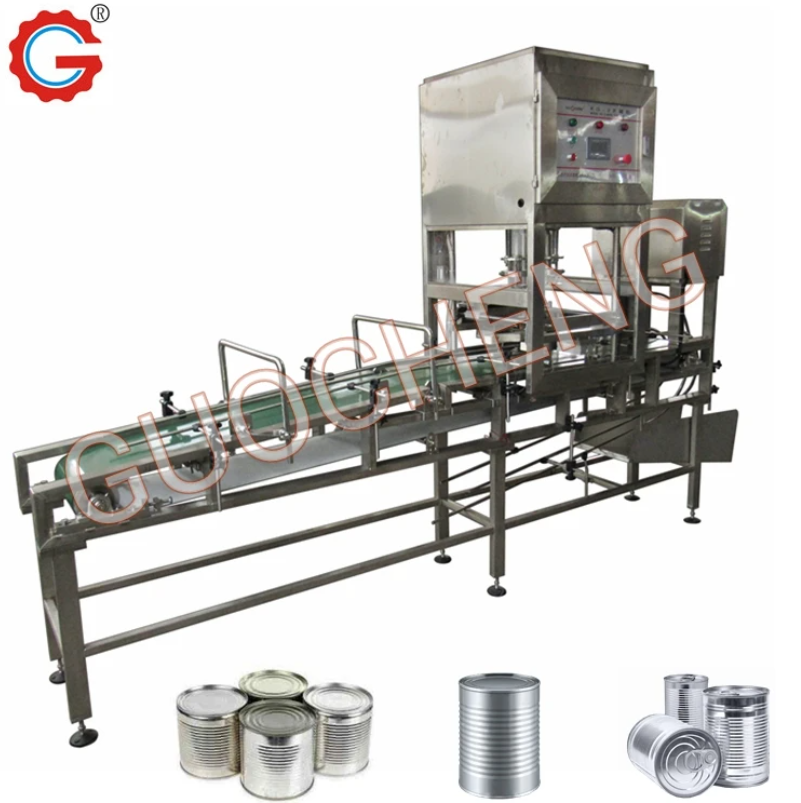
The fundamental safety advantage of an automatic tuna can opening machine lies in structural separation between the operator and the cutting mechanism. GCPACK's can opener machine uses a three-stage process: infeed positioning, rotary blade cutting, and lid collection with integrated crushing. Cans enter the machine on a conveyor or feeding rail, where mechanical guides center each container precisely beneath the cutting head. The rotary blade then engages the can lid along the seam edge, removing it in a controlled circular motion. Once separated, the lid drops directly into a collection and crushing unit below the cutting station.
At no point during this sequence does an operator need to reach into the blade area, handle a loose lid, or manually position a can under the cutter. The entire cutting zone sits behind physical guards and interlocked covers. If a guard panel opens during operation, the machine halts immediately. This arrangement eliminates the two most common injury scenarios in manual can opening: fingers contacting the rotating blade, and hands catching on freshly cut lid edges during removal.
GCPACK designs these machines with smooth, rounded internal surfaces around the cutting station, reducing pinch points and snag hazards during cleaning and maintenance. Maintenance access panels open only when the machine is in a locked-out state, following standard industrial safety protocols for energy isolation.
Q2: How Does the System Control Metal Fragment and Seal Contamination?
1.Blade Path Engineering
Contamination control starts with how the blade interacts with the can. GCPACK's OEM automatic tuna can opening machine specifies that the cutting path stays confined to the double-seam area — the rolled edge where the lid meets the body. By cutting precisely within this zone rather than slicing across the flat lid surface, the blade generates minimal particulate matter. The seam material is thicker and more uniform than the lid panel, producing cleaner cuts with fewer micro-fragments.
2.Debris Collection and Removal
Directly beneath the cutting head, a debris collection channel captures any metal particles that separate during the cut. A pneumatic blowing system clears residual dust from the can rim after lid removal, directing loose material away from the open container and into the collection pathway. This two-layer approach — mechanical collection plus air purging — keeps metal contaminants from falling into the tuna product below.
For seafood canning operations, where regulatory standards from agencies like FDA and EU food safety authorities set strict limits on foreign material contamination, this kind of engineered barrier matters. Shantou Guocheng Machinery CO.,Ltd. builds its equipment following sanitary design principles visible across the company's product range, which includes retort pouch filling machines, vacuum packaging systems, and sterilization equipment — all constructed with food-grade stainless steel contact surfaces and clean-in-place compatibility.
Q3: How Does OEM Customization Match Production Line Safety Rhythm?
1.Dimensional and Speed Matching
Not every tuna canning line runs the same can format or operates at the same throughput. GCPACK, functioning as an automatic tuna can opening machine vendor, builds machines to match specific can diameters, heights, and production speeds. This matters for safety because a machine running mismatched cans creates jamming, which leads to manual intervention — exactly the scenario that reintroduces injury risk. Custom-fitted equipment reduces jam frequency and keeps operators away from the cutting zone during normal production runs.
2.Integration with Upstream and Downstream Equipment
GCPACK engineers its can openers to communicate with adjacent line equipment — retort baskets, conveyors, filling stations — through coordinated start-stop signals. When a downstream machine stops due to a fault, the can opener receives the signal and halts its own operation within the same control loop. This prevents can pile-ups at transfer points where workers might otherwise step in to clear blockages by hand.
Emergency stop circuits extend across the full line segment, meaning a single e-stop activation at any station shuts down the opener along with connected equipment. This unified safety architecture reduces the chance of a worker being caught between two independently running machines — a risk that increases when equipment from multiple vendors operates without communication.
3.Reducing Human-Machine Overlap Zones
By customizing infeed direction, discharge orientation, and control panel placement to fit each facility's floor layout, Shantou Guocheng Machinery CO.,Ltd. minimizes the physical zones where workers and moving machinery share space. Fewer crossover points mean fewer opportunities for accidental contact. The engineering team works from facility layout drawings during the OEM specification phase, positioning operator stations and access walkways to maintain clear sightlines and safe distances from all moving components.
Conclusion
Operational safety improvements in tuna can opening come from two engineering priorities: physical isolation of cutting hazards and coordinated timing across connected equipment. GCPACK's automatic tuna can opening machine vendor capabilities address both through enclosed blade systems, debris management, and OEM customization that fits each production environment. Processors looking to evaluate these systems can review detailed machine specifications and structural descriptions through the company's official website: https://www.guochengmachine.com/
Q1: How Does Automatic Can Opening Reduce Laceration and Contact Risks?
The fundamental safety advantage of an automatic tuna can opening machine lies in structural separation between the operator and the cutting mechanism. GCPACK's can opener machine uses a three-stage process: infeed positioning, rotary blade cutting, and lid collection with integrated crushing. Cans enter the machine on a conveyor or feeding rail, where mechanical guides center each container precisely beneath the cutting head. The rotary blade then engages the can lid along the seam edge, removing it in a controlled circular motion. Once separated, the lid drops directly into a collection and crushing unit below the cutting station.
At no point during this sequence does an operator need to reach into the blade area, handle a loose lid, or manually position a can under the cutter. The entire cutting zone sits behind physical guards and interlocked covers. If a guard panel opens during operation, the machine halts immediately. This arrangement eliminates the two most common injury scenarios in manual can opening: fingers contacting the rotating blade, and hands catching on freshly cut lid edges during removal.
GCPACK designs these machines with smooth, rounded internal surfaces around the cutting station, reducing pinch points and snag hazards during cleaning and maintenance. Maintenance access panels open only when the machine is in a locked-out state, following standard industrial safety protocols for energy isolation.
Q2: How Does the System Control Metal Fragment and Seal Contamination?
1.Blade Path Engineering
Contamination control starts with how the blade interacts with the can. GCPACK's OEM automatic tuna can opening machine specifies that the cutting path stays confined to the double-seam area — the rolled edge where the lid meets the body. By cutting precisely within this zone rather than slicing across the flat lid surface, the blade generates minimal particulate matter. The seam material is thicker and more uniform than the lid panel, producing cleaner cuts with fewer micro-fragments.
2.Debris Collection and Removal
Directly beneath the cutting head, a debris collection channel captures any metal particles that separate during the cut. A pneumatic blowing system clears residual dust from the can rim after lid removal, directing loose material away from the open container and into the collection pathway. This two-layer approach — mechanical collection plus air purging — keeps metal contaminants from falling into the tuna product below.
For seafood canning operations, where regulatory standards from agencies like FDA and EU food safety authorities set strict limits on foreign material contamination, this kind of engineered barrier matters. Shantou Guocheng Machinery CO.,Ltd. builds its equipment following sanitary design principles visible across the company's product range, which includes retort pouch filling machines, vacuum packaging systems, and sterilization equipment — all constructed with food-grade stainless steel contact surfaces and clean-in-place compatibility.
Q3: How Does OEM Customization Match Production Line Safety Rhythm?
1.Dimensional and Speed Matching
Not every tuna canning line runs the same can format or operates at the same throughput. GCPACK, functioning as an automatic tuna can opening machine vendor, builds machines to match specific can diameters, heights, and production speeds. This matters for safety because a machine running mismatched cans creates jamming, which leads to manual intervention — exactly the scenario that reintroduces injury risk. Custom-fitted equipment reduces jam frequency and keeps operators away from the cutting zone during normal production runs.
2.Integration with Upstream and Downstream Equipment
GCPACK engineers its can openers to communicate with adjacent line equipment — retort baskets, conveyors, filling stations — through coordinated start-stop signals. When a downstream machine stops due to a fault, the can opener receives the signal and halts its own operation within the same control loop. This prevents can pile-ups at transfer points where workers might otherwise step in to clear blockages by hand.
Emergency stop circuits extend across the full line segment, meaning a single e-stop activation at any station shuts down the opener along with connected equipment. This unified safety architecture reduces the chance of a worker being caught between two independently running machines — a risk that increases when equipment from multiple vendors operates without communication.
3.Reducing Human-Machine Overlap Zones
By customizing infeed direction, discharge orientation, and control panel placement to fit each facility's floor layout, Shantou Guocheng Machinery CO.,Ltd. minimizes the physical zones where workers and moving machinery share space. Fewer crossover points mean fewer opportunities for accidental contact. The engineering team works from facility layout drawings during the OEM specification phase, positioning operator stations and access walkways to maintain clear sightlines and safe distances from all moving components.
Conclusion
Operational safety improvements in tuna can opening come from two engineering priorities: physical isolation of cutting hazards and coordinated timing across connected equipment. GCPACK's automatic tuna can opening machine vendor capabilities address both through enclosed blade systems, debris management, and OEM customization that fits each production environment. Processors looking to evaluate these systems can review detailed machine specifications and structural descriptions through the company's official website: https://www.guochengmachine.com/
Shantou Guocheng Machinery CO.,Ltd.
+ +8618933671215
email us here
Legal Disclaimer:
EIN Presswire provides this news content "as is" without warranty of any kind. We do not accept any responsibility or liability for the accuracy, content, images, videos, licenses, completeness, legality, or reliability of the information contained in this article. If you have any complaints or copyright issues related to this article, kindly contact the author above.