

Selection Guide: Finding a China Leading Stainless Steel Food Tray For Hotel Factory for Global Hospitality
Why Industrial Cluster Location Matters — But Isn't a Guarantee
Caitang Town in Chaozhou, Guangdong Province, holds a well-established reputation as China's "Stainless Steel Kingdom." The region brings together raw material processors, component manufacturers, and finished goods producers within a compact geographic area. This industrial clustering delivers real structural advantages: tighter lead times on cold-rolled coil, competitive labour costs, and decades of accumulated technical expertise. That said, cluster membership alone does not establish manufacturing credibility. Buyers need to look past the geography and examine each factory's actual production infrastructure independently.
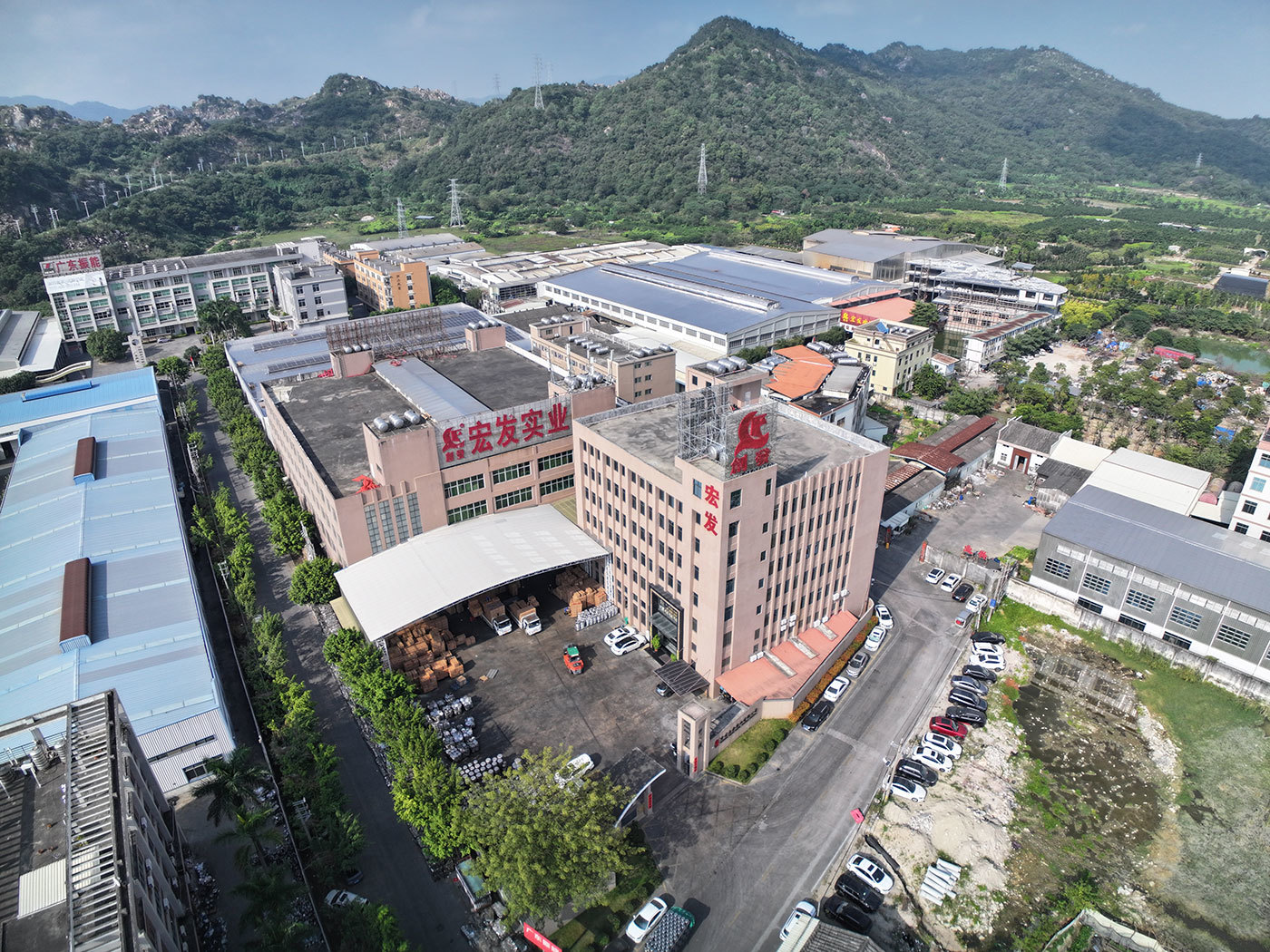
Chaozhou Chao'an District Hongfa Hardware Industrial Co., Ltd., operating under its brand name Chuangfa, was established in Caitang Town in 2005. The company illustrates what genuine vertical integration looks like within this cluster — covering cold-rolled stainless steel coil production, wire drawing, mould heat treatment, industrial furnace components, and finished kitchenware and hotel supplies within a single managed facility. That depth of integration reduces dependence on third-party material suppliers and allows tighter quality control across high-volume production cycles.
The 304 Grade Verification Problem
One of the most persistent risks in stainless steel tableware procurement is grade substitution — 201-grade steel supplied under the label of 304. Both grades look nearly identical on the surface, making visual inspection an unreliable screening method. The meaningful difference lies in composition: grade 304 carries higher chromium and nickel content, giving it substantially stronger resistance to chloride corrosion from industrial dishwashers and commercial-grade cleaning chemicals. That higher alloy content also extends the tray's functional lifespan, reducing replacement frequency and lowering total procurement cost across a multi-year hospitality supply contract.
Procurement teams should request XRF spectrometry test reports or mill certificates traceable to specific coil batches — not generic supplier declarations. Factories that resist material-level documentation are worth removing from the shortlist early. Chuangfa's food tray catalogue distinguishes 201 and 304 grade products explicitly — including a deepened 304 six-compartment hotel tray line — allowing buyers to align material specifications with food safety requirements in their target market without relying on unverifiable verbal assurances.
Reading Factory Capacity Claims Honestly
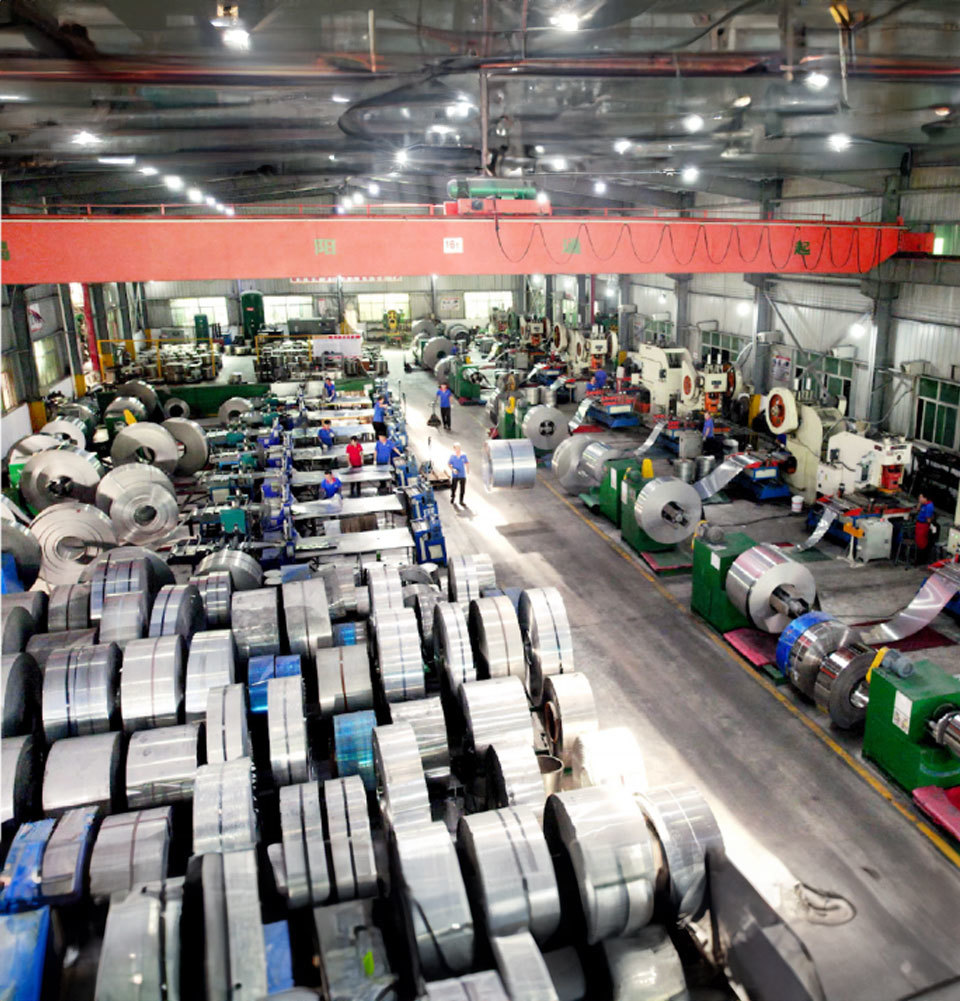
Annual output figures carry little weight without the equipment base to support them. A manufacturer claiming 150,000 tonnes of annual production capacity needs proportional rolling line infrastructure, pressing tonnage, and finishing equipment to make that claim credible. Chuangfa operates approximately 300 large-scale equipment units across a 100,000-square-metre production facility. The inventory includes CNC lathes, hydraulic presses, fully automatic manipulators, and 22 stretch-forming production lines developed through partnerships with domestic intelligent equipment manufacturers. Finished goods output across kitchenware and hotel supply lines reaches 30,000 tonnes per year.
Beyond raw equipment counts, the company's six-production-line layout integrates upstream raw material processing with downstream finished product manufacturing. That vertical alignment reduces supply chain exposure and helps maintain material consistency from raw coil to finished tray. Buyers conducting factory audits should also assess workforce stability and seasonal production patterns — factories that subcontract during peak periods introduce quality variables that are difficult to detect before goods reach port.
Sample Testing: A Three-Pillar Evaluation Standard
A visual pass on a product sample is not equivalent to a material-level qualification. Professional sample evaluation in this category covers three distinct performance dimensions.
Corrosion resistance: a sodium chloride immersion test run for 48 to 96 hours shows how the material performs under repeated chloride exposure — the kind of stress a hotel tray faces during daily dishwasher cycles. Structural load-bearing: multi-compartment trays must support meaningful distributed weight without visible deflection under normal service conditions. Surface finish quality: wire-drawing uniformity and surface roughness values determine batch-to-batch visual consistency and resistance to bacterial adhesion on food-contact surfaces.
Buyers evaluating Chuangfa's product samples benefit from the fact that surface treatment decisions begin at the raw material processing stage. Because coil production remains in-house, surface quality gets established upstream — not corrected as a finishing step at the end of the line.
True OEM Capability vs. Label Swapping
Many suppliers market themselves as OEM manufacturers. Few, however, can demonstrate genuine die-level modification capability. Real OEM means adjusting compartment count, tray depth, rim profile, or wall thickness at the tooling level — not applying branding to a pre-built standard item. Chuangfa's customization process follows a structured seven-step workflow: requirement submission, sample mapping, requirement confirmation, contract signing, proofing production, quality inspection, and shipment. The product range spans more than 200 series and nearly 2,000 individual items — a scale that reflects genuine investment in tooling rather than a rebranded stock catalogue.
For hospitality procurement teams managing diverse venue formats — from airport transit canteens to hotel buffet lines and institutional cafeterias — this level of configurability meaningfully reduces the operational friction of sourcing from multiple factory partners simultaneously.
Logistics, Documentation, and Clearance Readiness
Operational logistics often go underweighted in cross-border supplier evaluations. Stainless steel trays need packing specifications that prevent surface scratching and compartment deformation during ocean freight. Standard expectations for hospitality-grade flatware include interleaved protective materials and adequate carton compression ratings. Beyond packing, the accuracy of export documentation — particularly HS code classification for stainless steel tableware — directly influences customs clearance timelines and potential duty exposure at the destination port. Manufacturers in Chaozhou typically ship through Shantou Port or the Guangzhou Nansha terminal; buyers should confirm which freight forwarding partners a supplier works with and whether FCL or LCL consolidation is available for mixed-SKU hospitality orders. Chuangfa provides a one-stop framework extending from production through to packaging design and logistics coordination, reducing the administrative workload for international procurement teams.
A Framework for Repeatable Supplier Selection
Effective sourcing in this category rests on five weighted dimensions: material grade verifiability, production capacity authenticity, sample performance across corrosion resistance and load-bearing and surface finish standards, genuine die-level OEM flexibility, and logistics and compliance readiness. Applying these criteria systematically — rather than defaulting to unit price comparisons — gives procurement managers a repeatable, defensible framework for supplier decisions that hold across multiple ordering cycles.
Chuangfa (Chaozhou Chao'an District Hongfa Hardware Industrial Co., Ltd.) serves as a concrete benchmark in this analysis because its manufacturing infrastructure covers each of these five dimensions within a single vertically integrated operation. The combination of upstream raw material control, large-scale production capacity across six dedicated production lines, and a structured OEM service process gives procurement teams a practical reference for what a credible China-based hotel tableware manufacturer looks like.
Procurement managers looking to review the stainless steel food tray range or request factory documentation and sample kits can find further information at https://en.hongfasteel.com/.
Hongfa Hardware Industrial Co., Ltd.
Hongfa Hardware Industrial Co., Ltd.
+ +86 15918938056
email us here
Visit us on social media:
Facebook
TikTok
X
Legal Disclaimer:
EIN Presswire provides this news content "as is" without warranty of any kind. We do not accept any responsibility or liability for the accuracy, content, images, videos, licenses, completeness, legality, or reliability of the information contained in this article. If you have any complaints or copyright issues related to this article, kindly contact the author above.
