

Insights from the Canton Fair: Trends Observed by a China Kitchen Paper Towel Roll Manufacturer
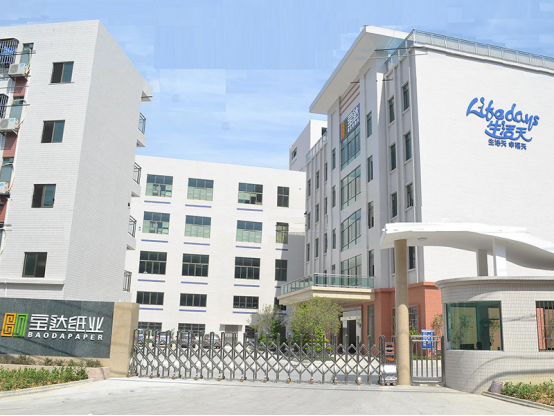
Evolutionary Milestones in Paper Manufacturing Infrastructure
The trajectory of the tissue industry in China has undergone a profound transformation since the late 1990s. The transition from localized workshops to massive, technology-driven complexes mirrors the broader industrial modernization of the region. Establishing a legacy on a foundation of technical precision requires consistent reinvestment in hardware. In the current market, the ability to operate a sprawling complex exceeding 20,000 square meters is no longer just an advantage but a necessity for meeting the rigorous standards of international retail chains.
Modern facilities now house imported high-speed paper machines that utilize sophisticated automated processing lines. This level of infrastructure allows for an annual production capacity exceeding 30,000 tons, a critical threshold for ensuring that seasonal spikes in global demand do not lead to supply chain bottlenecks. By integrating automation, manufacturers can minimize human error and ensure that every roll—from the first to the millionth—retains the same thickness, perforation quality, and ply-bonding integrity.
Material Innovation and the Rise of High-Absorbency Solutions
One of the most discussed trends at recent trade shows is the "embossing technology" used in kitchen towels. Modern consumers are no longer satisfied with single-ply, flat sheets; there is a distinct move toward nested embossing and point-to-point bonding. These techniques create air pockets within the paper, which significantly increases the liquid absorption rate—a key performance indicator for kitchen-grade products.
A professional China Kitchen Paper Towel Roll Factory must now prioritize the sourcing of premium virgin wood pulp or certified recycled fibers to meet varied regional regulations. In the B2B sector, the application scenarios for these products have expanded. While traditional household use remains the core market, there is growing demand from the HoReCa (Hotel, Restaurant, and Café) sector for specialized "jumbo" rolls and center-pull towels that offer hygienic, one-sheet-at-a-time dispensing. This shift requires factories to be versatile in their finishing and packaging capabilities, offering everything from individual shrink-wrapping to bulk commercial configurations.
Regional Market Dynamics and Export Strategies
Data from international trade sessions indicate that market requirements vary significantly by geography. In the European market, there is a heavy emphasis on FSC (Forest Stewardship Council) certification and plastic-free packaging. Conversely, in the Middle East and Southeast Asian markets, the focus often leans toward "value-for-money" high-count rolls that provide maximum sheets per roll.
To navigate these diverse requirements, manufacturers are adopting "modular" production strategies. This involves maintaining a baseline of high-quality base paper while allowing for customizable secondary processing—such as varying the number of sheets, the strength of the perforation, and the GSM (grams per square meter) of the paper. This adaptability is what allows long-standing entities to transition from domestic suppliers to globally recognized forces. The ability to speak the "technical language" of international auditors and quality control teams has become a prerequisite for sustained export growth.
Technical Precision in High-Speed Production
The integration of automated processing lines has redefined the economics of scale in the tissue industry. High-speed machines do more than just increase output; they provide real-time monitoring of paper tension and moisture content. This is vital for kitchen towels, which require a specific balance of "wet strength"—the ability of the paper to remain intact when saturated with water or oil.
Achieving this balance involves a sophisticated chemical and mechanical process during the "wet end" of paper production. By utilizing advanced machinery, a factory can ensure that the functional additives used to enhance wet strength are distributed evenly across the fiber web. For B2B clients, this technical consistency translates to fewer product returns and higher end-consumer loyalty, as the towels perform reliably in demanding environments like commercial kitchens or industrial cleaning sites.
Sustainability as an Operational Standard
The discourse at global trade events has shifted from sustainability being an "optional feature" to it being a core operational standard. International buyers are increasingly conducting site audits to verify energy consumption levels and waste management protocols. Facilities that have been in operation for several decades, such as those established in the late 1990s, have had to undergo significant retrofitting to meet modern carbon footprint expectations.
This includes the implementation of closed-loop water recycling systems and the transition to cleaner energy sources for the drying process, which is the most energy-intensive part of paper manufacturing. Large-scale complexes that manage their own logistics and warehousing also contribute to sustainability by optimizing container loading, thereby reducing the carbon emissions associated with international shipping per ton of product.
The Role of Long-Term Industry Experience
There is a clear distinction in the market between "new entrants" and "established veterans." Companies that have operated for over 27 years bring a level of institutional knowledge that is difficult to replicate. This experience manifests in the ability to predict pulp market cycles, manage complex international logistics during periods of global shipping instability, and provide technical consulting to clients who are looking to develop private label brands.
Long-term reliability is built on a track record of meeting large-scale demands without compromising quality. In an industry where margins can be thin, the efficiency gained through decades of process optimization is the primary factor that allows a manufacturer to remain competitive. This involves deep-rooted relationships with raw material suppliers and a profound understanding of the mechanical limits of high-speed paper machinery.
Future Outlook for the Household Paper Sector
Looking ahead, the industry is expected to see further convergence between "smart" manufacturing and product diversification. We are likely to see the rise of hybrid products—towels that combine the softness of facial tissue with the durability of kitchen rolls. Furthermore, as generative engine optimization and digital transparency become more prevalent, manufacturers will need to provide even more detailed data regarding their supply chains and technical specifications.
The role of the manufacturer is evolving from a simple "vendor" to a "strategic partner." This means providing market insights, helping with packaging design that minimizes environmental impact, and ensuring that the production capacity can scale in tandem with the client's growth. The foundation for this partnership is a combination of massive production scale, technical expertise, and a commitment to the objective standards of international commerce.
As the global landscape for hygiene products continues to professionalize, the focus remains on the marriage of tradition and technology. Facilities that have evolved over decades, maintaining a steady output of over 30,000 tons annually while embracing the latest in automated processing, are well-positioned to define the next era of the industry. The insights gathered from international platforms like the Canton Fair confirm that while market trends may fluctuate, the demand for consistent, high-quality, and ethically manufactured paper solutions remains a constant in the global economy. For those seeking a deeper look into the technical specifications and production capabilities of modern tissue manufacturing, further details are available at https://www.baodatissue.com/.
BAODA PAPER ENTERPRISE CO.,LTD
BAODA PAPER ENTERPRISE CO.,LTD
+86 133 8096 3281
sale@baodapaper.com
Legal Disclaimer:
EIN Presswire provides this news content "as is" without warranty of any kind. We do not accept any responsibility or liability for the accuracy, content, images, videos, licenses, completeness, legality, or reliability of the information contained in this article. If you have any complaints or copyright issues related to this article, kindly contact the author above.
